
Choosing the right Lotion Making Equipment can determine whether a production line delivers silky creams or inconsistent batches. Global buyers must examine more than machine speed. Vessel capacity, heating control, vacuum performance, mixing strength, cleaning access, and export support all influence daily results. A compact laboratory mixer may suit product trials, while a jacketed vacuum emulsifier fits larger commercial production.
Dr. Elena Marquez, an independent cosmetic process engineer, says, “Reliable lotion production begins with controlled energy, cleanable surfaces, and equipment matched to the formula.” Her observation is practical. A thick body butter needs stronger scraping and homogenization than a light facial lotion. Temperature sensors should respond quickly. Poor calibration can leave hot spots near the vessel wall. That mistake may appear small, yet it can change texture, stability, and filling performance.
This guide reviews ten Lotion Making Equipment options for international buyers. It considers operating scale, material quality, automation, maintenance, and supplier communication. Stainless steel construction matters, especially around heated emulsions and frequent washdowns. Documentation matters too. English manuals, wiring diagrams, spare-parts access, and factory testing reduce uncertainty across borders.
Some comparisons remain imperfect. Supplier specifications are not always measured under identical conditions. Marketing claims can sound impressive. They need practical verification. Buyers should request sample trials, reference installations, and clear quotations before committing. A machine that looks affordable may require costly upgrades later. Conversely, the most automated system may exceed a small factory’s real needs.
Good equipment is not simply powerful. It is predictable, serviceable, and suitable for the formula. That is the standard behind this global selection.
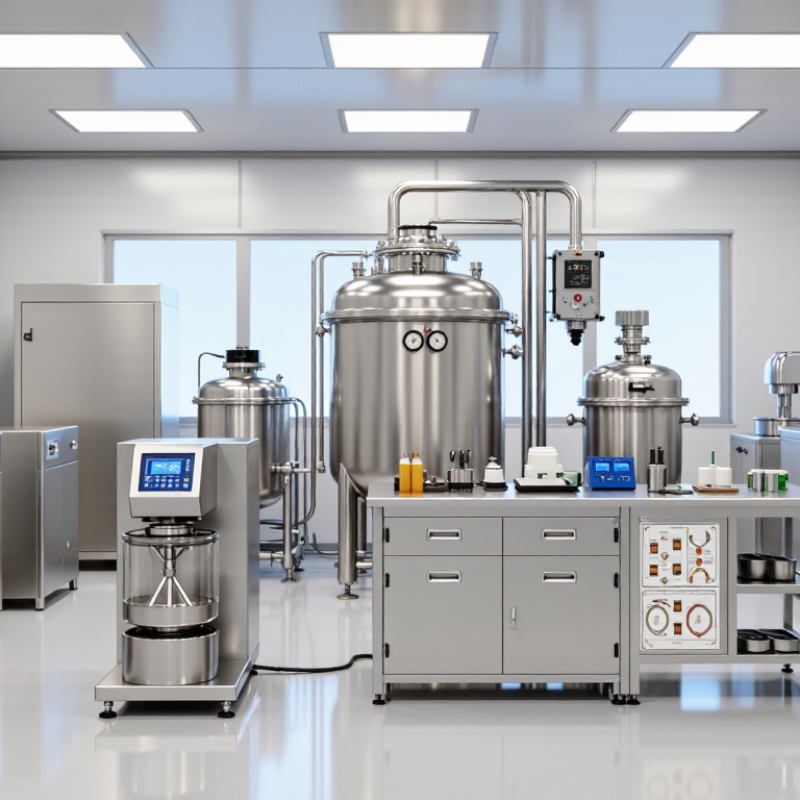
Lotion making equipment must support accurate mixing, heating, emulsifying, cooling, and filling. A production line may include stainless steel vessels, high-shear homogenizers, vacuum mixers, transfer pumps, and piston or peristaltic fillers. Each machine affects texture, stability, hygiene, and production speed. A smooth lotion often depends on controlled shear and steady temperature, not only on the formula.
Equipment types should match the buyer’s output and process. Laboratory mixers suit product trials, while jacketed tanks handle larger batches. Vacuum systems can reduce trapped air and improve appearance. Scrapers help prevent thick lotion from sticking to vessel walls. When selecting equipment, check working volume, heating range, mixing speed, contact-material quality, cleaning access, and electrical compatibility. Ask for test records and realistic capacity data. “Maximum volume” can be misleading.
Tips: Request a sample trial with your actual lotion formula. Watch the batch during heating and cooling. Confirm whether operators can remove the mixing shaft safely. Spare seals and temperature sensors matter more than many buyers expect. A compact machine may save space, but it can limit future growth. I have seen buyers focus on tank size and overlook filling accuracy. That mistake becomes expensive later. Leave room for maintenance, training, and imperfect batches. Reliable equipment should be measurable, cleanable, and practical for daily use.
Lotion production starts with controlled heat, steady mixing, and reliable emulsification. Grand View Research valued the global cosmetics market at about USD 446.2 billion in 2023, with continued growth expected through 2030. This expansion increases pressure on manufacturers to improve batch consistency and equipment hygiene.
A jacketed stainless-steel vessel provides stable heating for water and oil phases. A temperature probe should sit near the product, not against the vessel wall. An anchor agitator handles thick lotion gently, while a high-shear mixer reduces droplets during emulsification. A homogenizer can create a smoother texture, but excessive shear may trap air. That mistake is common.
Useful supporting equipment includes a purified-water system, transfer pump, vacuum deaerator, inline filter, weighing scale, and filling machine. ISO 22716 emphasizes controlled production, cleaning, and documented processes for cosmetic manufacturing. Mordor Intelligence’s cosmetics market analysis also identifies premium skincare and quality consistency as important growth factors. Therefore, equipment should support traceability, repeatable heating, and easy cleaning.
In practice, a larger mixer is not always better. Our process may need slower agitation than expected. Operators should test viscosity, pH, temperature, and microbial quality after each trial batch. A weak sampling plan can hide uneven emulsification. Equipment selection must match formula viscosity, batch size, utilities, and cleaning capability.
10 Best Lotion Making Equipment for Global Buyers
Top Lotion Manufacturing Machines for Different Production Scales
Production scale should guide equipment selection more than advertised speed. IMARC Group valued the global cosmetics market at approximately USD 343.7 billion in 2023, with continued growth expected through 2032. This expansion increases demand for flexible lotion manufacturing systems, especially among emerging producers.
For laboratory batches, a compact overhead mixer, hot plate, precision scale, and small vacuum homogenizer offer practical control. These machines help test viscosity, heating time, and emulsion stability using limited raw materials. Pilot plants often need jacketed mixing tanks, inline homogenizers, transfer pumps, and semi-automatic filling machines. A 50–500-liter system can reveal problems before full-scale investment. Small mistakes become expensive quickly.
High-volume factories require vacuum emulsifying mixers, automated heating systems, high-shear homogenizers, storage tanks, piston fillers, capping machines, and cleaning systems. Grand View Research reports that the global personal care market is expanding steadily, supporting demand for higher production efficiency and consistent texture. However, maximum capacity is not always the best purchase. An oversized mixer may waste energy, increase cleaning time, and reduce batch flexibility. In real plant evaluations, operators sometimes overlook ergonomic access and spare-part availability. That choice can damage reliability more than a slower machine. Controls, material certificates, temperature accuracy, and documented factory testing deserve equal attention.
When comparing lotion-making equipment, global buyers should examine process control before polished appearance. Grand View Research valued the global cosmetics market at approximately USD 446.2 billion in 2023, with continued growth expected through 2030. That pressure makes stable, repeatable production more important than a low purchase price.
Check whether the mixer offers vacuum emulsification, adjustable high-shear mixing, and separate heating and cooling controls. These features help reduce air pockets, improve texture, and protect heat-sensitive ingredients. Ask for the actual mixing range, not only the maximum tank volume. A 1,000-liter vessel may perform poorly with a 100-liter batch. Stainless steel contact parts should have smooth welds and hygienic surfaces. Confirm cleanability, drainability, and compatibility with cosmetic GMP practices under ISO 22716 guidance.
Controls deserve careful testing. Recipe storage, temperature records, alarm history, and batch traceability can support quality investigations. PMMI industry reports consistently identify automation, flexible production, and data visibility as major packaging and processing priorities. Energy use also matters, especially when heating and cooling large batches repeatedly. Request power consumption data under realistic loads. Do not trust a brochure alone. A polished interface can hide weak cooling performance. I would require a sample trial using a lotion formula close to the intended product. Service response, spare-part availability, operator training, and installation support often decide the real cost. Buyers sometimes overvalue speed and undervalue maintenance access. That mistake is expensive.
| No. | Equipment Type | Primary Function | Typical Working Capacity | Typical Speed Range | Temperature Capability | Vacuum Capability | Common Contact Material | Best Suited For | Key Features to Compare |
|---|---|---|---|---|---|---|---|---|---|
| 1 | Vacuum Emulsifying Mixer | Combines heating, mixing, homogenizing, and deaeration in one vessel. | 50–5,000 L | Anchor: 10–60 rpm Homogenizer: 1,500–3,600 rpm |
Typically 20–120 °C, depending on the heating system and vessel design. | Typically -0.08 to -0.095 MPa | 304 or 316L stainless steel | Emulsions, creams, body lotions, and high-viscosity skincare products. | Vacuum stability, homogenizer power, scraper design, heating method, cooling time, cleaning access, and discharge arrangement. |
| 2 | High-Shear Homogenizer | Reduces droplet and particle size to create a smoother and more uniform emulsion. | 5–2,000 L | 1,500–12,000 rpm | Usually installed in a temperature-controlled mixing vessel. | Requires a separate vacuum vessel or vacuum-compatible installation. | 316L stainless steel for wetted parts | Fine oil-in-water lotions, creams, and products requiring a smooth texture. | Rotor-stator geometry, motor power per batch volume, shear intensity, seal type, cleanability, and replacement-part availability. |
| 3 | Anchor Agitator Mixing Tank | Provides gentle bulk mixing and wall sweeping for medium- to high-viscosity formulations. | 50–10,000 L | 10–100 rpm | Commonly 20–100 °C with a jacket or internal coil. | Optional, when the tank is designed for vacuum service. | 304 or 316L stainless steel | Daily lotion batches, viscous creams, and products sensitive to excessive shear. | Anchor-to-wall clearance, scraper material, torque rating, jacket coverage, tank geometry, and bottom outlet design. |
| 4 | Propeller or Paddle Mixing Tank | Disperses water-soluble ingredients and performs general liquid blending. | 100–20,000 L | 30–300 rpm | Ambient to approximately 90 °C, depending on construction. | Usually not included; vacuum-rated construction may be specified. | 304 or 316L stainless steel | Low- to medium-viscosity lotions, aqueous phases, and premixes. | Impeller type, flow pattern, baffle arrangement, mixing time, vortex control, and motor efficiency. |
| 5 | Planetary Mixer | Mixes and kneads high-viscosity materials with strong wall and bottom coverage. | 5–1,000 L | 5–80 rpm; optional high-speed disperser up to approximately 1,500 rpm | Often up to 120 °C with a jacketed vessel. | Optional or standard on selected sealed models. | 304 or 316L stainless steel | Very thick creams, concentrated emulsions, and products with a high solids content. | Torque capacity, lifting mechanism, tool configuration, vacuum sealing, discharge method, and batch residue after unloading. |
| 6 | Inline Rotor-Stator Mixer | Processes circulating product outside the main tank for rapid dispersion and emulsification. | 500–20,000 L/h typical processing flow | Approximately 1,500–3,600 rpm | Depends on the connected tank, heat exchanger, and seal arrangement. | Normally used with a vacuum-capable process tank. | 316L stainless steel wetted housing | Continuous or recirculating production of lotions and emulsions. | Flow rate, pressure drop, rotor-stator stages, seal compatibility, pipe connections, noise level, and sanitation design. |
| 7 | Powder Induction and Dispersion System | Introduces powders into liquid while minimizing floating, lump formation, and dust release. | 500–10,000 L/h powder-liquid processing capacity, depending on formulation | Typically 1,500–3,600 rpm at the dispersion head | Determined by the main tank and formulation requirements. | Can be integrated with a vacuum process vessel. | 316L stainless steel for product-contact areas | Thickeners, polymers, pigments, powders, and difficult-to-wet ingredients. | Powder feed rate, air incorporation, hopper design, dispersion quality, dust control, clean-in-place performance, and clog resistance. |
| 8 | Jacketed Holding and Buffer Tank | Maintains product temperature and stores an intermediate or finished batch before filling. | 100–20,000 L | 10–100 rpm with a low-shear agitator | Typically 20–90 °C | Optional; generally not required for simple holding service. | 304 or 316L stainless steel | Temperature-sensitive lotions, transfer staging, and filling-line supply. | Insulation, jacket uniformity, level measurement, low-shear mixing, outlet height, and temperature-control accuracy. |
| 9 | Tube or Bottle Filling Machine | Accurately doses lotion into tubes, bottles, jars, or other primary containers. | Approximately 20–150 containers per minute, depending on format and fill volume | Filling volume and line speed are adjustable; common fill ranges are 5–1,000 ml | Normally operates at ambient conditions; heated hoppers may be available for viscous products. | Not normally required. | Stainless steel product-contact components | Small, medium, and large-scale packaged lotion production. | Filling accuracy, container-size changeover, nozzle design, anti-drip control, servo dosing, cleaning time, and packaging compatibility. |
| 10 | Vacuum Deaeration Tank | Removes entrapped air from lotion before transfer or filling to improve appearance and filling consistency. | 50–5,000 L | Optional slow agitator: 10–60 rpm | Typically 20–90 °C | Typically -0.08 to -0.095 MPa | 304 or 316L stainless steel | Air-sensitive products, bubble-prone emulsions, and high-quality cosmetic filling operations. | Vacuum pump sizing, demisting protection, vessel strength, sight glass, agitation control, product recovery, and hygienic discharge. |
Note: Capacity, speed, temperature, and vacuum figures are typical industry ranges. Actual specifications depend on formulation viscosity, batch size, process design, local electrical standards, and required hygiene level.
Choosing lotion-making equipment requires more than comparing tank volume or motor power. A vacuum emulsifier, jacketed mixing tank, homogenizer, sanitary pump, filling machine, water-treatment unit, laboratory mixer, and viscometer should support safe, repeatable production. McKinsey’s 2023 beauty report projects the global beauty market could reach about $580 billion by 2027. Growth increases pressure on suppliers, but faster output must not weaken hygiene controls.
Look for 316L stainless steel on product-contact surfaces, polished welds, sealed bearings, and readable temperature sensors. Equipment should support cleaning validation, drainage, and controlled heating. ISO 22716 provides cosmetic GMP guidance, while the 2022 ISO Survey recorded 1,265,216 ISO 9001 certificates worldwide. Certification helps, but it does not prove that a machine is easy to sanitize. Ask for material certificates, surface-finish records, electrical test results, and factory acceptance-test data. Short answers are warning signs.
Maintenance details often reveal supplier quality. Request spare-parts lists, lubrication schedules, calibration intervals, and remote troubleshooting procedures. Check whether operators can remove seals without touching product zones. Review emergency stops and overload protection during a live demonstration. Very important.
One weakness in my own checklist is relying too heavily on documents. A clean dossier can still hide poor workmanship. Visit the factory when possible, inspect welds under bright light, and run a small batch with your actual lotion formula. Compare viscosity, temperature stability, filling accuracy, and cleaning time. Supplier evaluation should include total ownership cost, technician response time, training, and local service capacity—not only the purchase price.
Procurement evaluation scores across safety, quality standards, maintenance, and supplier documentation
Scores use a five-point buyer checklist: documented machine safety and risk controls, compatibility with cosmetic GMP and hygienic design, ease of cleaning and preventive maintenance, and supplier documentation such as testing records, manuals, material certificates, and after-sales support. The ratings are a practical comparison framework rather than manufacturer-specific claims.
A typical line needs a stainless-steel vessel, mixer, homogenizer, pump, and filling machine. Heating and cooling must remain controlled. A purified-water system may also be necessary. Keep the process measurable.
A jacketed vessel heats water and oil phases evenly. It also supports controlled cooling after emulsification. The temperature probe should sit near the product. Wall readings can be misleading.
An anchor agitator moves thick lotion gently and steadily. Scrapers reduce buildup on vessel walls. A high-shear mixer helps reduce droplet size. Excessive shear may trap air.
Vacuum mixing can reduce trapped air and improve the lotion’s appearance. It may also help create a denser texture. Watch the batch during mixing. Vacuum is not a cure for every problem.
Match working volume with batch size, viscosity, heating needs, and future demand. Do not rely only on maximum volume. A tank filled too little may mix poorly. A compact machine can limit future growth.
Product-contact surfaces should use suitable stainless steel with polished welds. Sealed bearings and good drainage reduce contamination risks. Cleaning access matters greatly. Shiny surfaces are not enough.
Request a trial using the actual lotion formula. Check viscosity, temperature stability, filling accuracy, and cleaning time. Test both heating and cooling. Real batches reveal uncomfortable truths.
Ask for spare seals, temperature sensors, calibration intervals, and lubrication schedules. Confirm that operators can remove the mixing shaft safely. Review emergency stops and overload protection. Small parts become expensive problems.
Request material records, electrical test results, and realistic capacity data. Inspect welds under bright light when possible. A clean document package can still hide weak workmanship. I would not trust paperwork alone.
Lotion Making Equipment plays a central role in producing consistent, stable, and high-quality skincare products. This overview explains the main functions of lotion production systems, including heating, mixing, homogenizing, emulsifying, filling, and packaging. It also introduces equipment options for laboratories, small workshops, medium-sized facilities, and large-scale manufacturing plants, helping global buyers match machine capacity and automation levels with their production needs.
Before purchasing, buyers should compare vessel volume, temperature control, mixing speed, vacuum capability, material quality, energy efficiency, cleaning convenience, and compatibility with different formulations. Safety features, hygienic design, recognized quality standards, maintenance requirements, spare-parts availability, installation support, and supplier reliability are equally important. A careful evaluation of technical specifications, operating costs, after-sales service, and production goals can help companies select dependable equipment, improve batch consistency, reduce waste, and support long-term manufacturing efficiency.
