
Choosing an Automatic Mascara Filling Machine requires more than comparing prices and production speeds. The right equipment must match your formula, container design, filling volume, and daily output. A thick, fiber-rich mascara behaves differently from a smooth cream formula. Its texture can affect pump pressure, nozzle selection, and filling accuracy.
In practical evaluations, operators should watch the machine during real production conditions. Check how smoothly it handles narrow mascara tubes, wipers, and different brush assemblies. Observe the filling nozzle closely. Does it reduce dripping, air bubbles, and product residue around the neck? Small details matter. A few wasted grams per tube can become a serious cost across thousands of units. Servo-driven systems may offer better control, but advanced features do not automatically guarantee better results.
Reliable selection also depends on cleaning access, recipe adjustment, operator safety, and technical support. Ask for documented testing with your actual formula and packaging. Review filling tolerance, changeover time, maintenance requirements, and spare-part availability. A reputable manufacturer should explain limitations clearly, not only display impressive samples. No machine is perfect. Even a well-designed Automatic Mascara Filling Machine may require adjustments after installation, especially when viscosity changes with temperature.
The decision should be supported by production records, trial results, and feedback from experienced operators. It is easy to overlook ergonomics while focusing on automation. That can be a mistake. A machine that fills quickly but slows cleaning may reduce total efficiency. Careful comparison creates a more dependable investment, improves consistency, and supports stable cosmetic manufacturing over time.
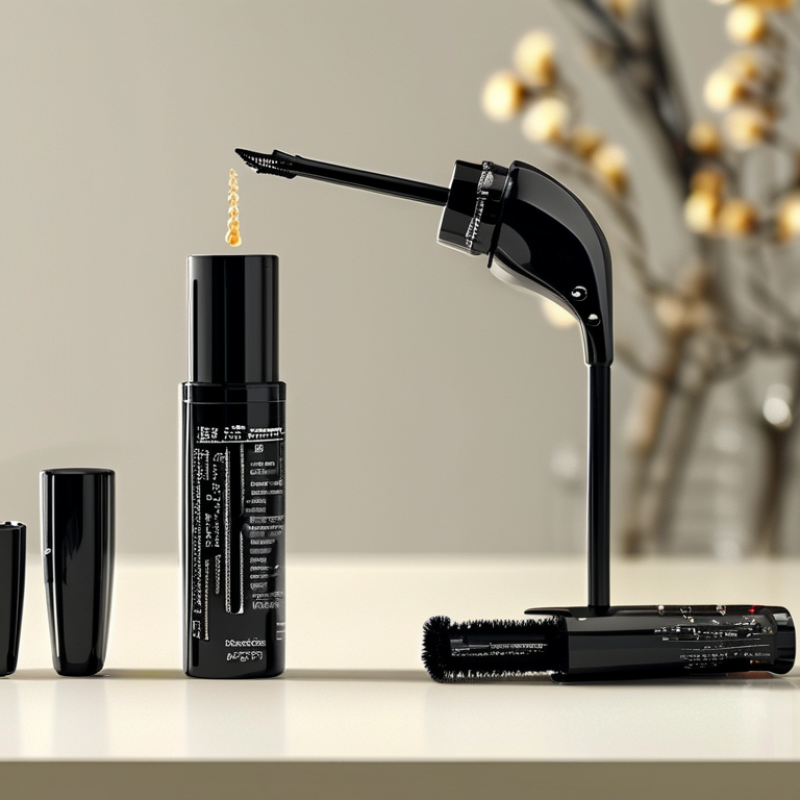
When choosing an automatic mascara filling machine, define the fill target before comparing speed or automation. A practical benchmark is 5–15 mL per container, with accuracy within ±1% of the set volume. For a 10 mL pack, this allows only about ±0.10 mL variation. That tolerance is tighter than it appears.
In production trials, mascara viscosity often changes during filling. Waxes may cool near the nozzle, while fibers can settle inside the hopper. A servo-driven piston or precision pump can improve repeatability, but only when the product path is designed correctly. Check the hopper mixer, nozzle shut-off, and anti-drip function. Small stringing at the nozzle can create noticeable volume loss. It can also dirty the container neck.
Request test data using your actual formula and container. Ask for at least 20 consecutive fills at 5 mL, 10 mL, and 15 mL settings. Measure net weight, then convert it to volume using the product’s verified density. Do not rely only on the machine display. Inspect samples after filling, capping, and a short holding period.
Changeover details matter too. Tool-free nozzle adjustment saves time, but it may reduce stability if the adjustment scale is vague. Easy cleaning is valuable, although some compact systems still leave product in corners. That is an engineering weakness worth discussing. Select a machine that records settings, supports calibration, and maintains ±1% performance under realistic operating conditions.
A machine rated at 30–120 units per minute should match your real production target. Do not select equipment by its highest advertised speed alone. Mascara formulas vary in viscosity, fiber content, and drying behavior. These differences affect filling accuracy and nozzle performance. A 30-unit machine may suit small batches, frequent color changes, or careful product testing. A 120-unit machine is more suitable for continuous production with stable materials and standardized containers. The rating usually assumes ideal conditions, not every factory situation.
In practical evaluations, operators should test the machine with the actual formula, bottle, brush, and wiper. Measure output over a full working hour, not only during a short demonstration. Include filling pauses, container loading, cleaning, and minor adjustments. A machine rated at 120 units per minute may deliver 85 units in real operation. That gap can affect labor planning and delivery schedules. It is easy to overlook. Check fill-weight variation, leakage, nozzle synchronization, and changeover time. Reliable controls and clear operating records also support consistent quality.
Tips: Leave capacity space for future demand, but avoid paying for unused speed. Ask for a timed trial with your own packaging materials. Review rejected units, cleaning time, and operator workload. A slower machine can sometimes produce better results when the formula is thick or sensitive. Recheck assumptions after testing; initial estimates are often too optimistic.
How to Choose an Automatic Mascara Filling Machine?
A hygienic machine starts with its product-contact path. Choose smooth stainless-steel surfaces, polished welds, and minimal crevices. Prefer 316L stainless steel where formula exposure and cleaning chemicals justify it. ISO 22716:2007 expects equipment to prevent contamination and support effective cleaning. It also requires documented cleaning and maintenance controls. Ask the supplier for material certificates, surface-finish records, cleaning instructions, and change-control procedures.
Mascara is thick, stringy, and easily trapped around valves, nozzles, and piston seals. During a factory inspection, inspect these areas after a simulated cleaning cycle. A flashlight can reveal residue better than a brochure. The filling head should disassemble without excessive tools. Product-contact parts should tolerate the approved detergents and temperatures. Compressed air also needs attention. Install filtration and monitor pressure, because unclean air can recontaminate a clean filling path.
The European Commission’s Safety Gate 2023 report recorded 3,412 product alerts across the European market. Chemical risks remained a major concern in reported cases. This does not prove that filling equipment caused those events. It does show why contamination controls deserve measurable evidence. FDA cosmetic GMP guidance similarly emphasizes sanitation, equipment maintenance, and written procedures. A machine may look hygienic yet fail during production. Request swab-test methods, cleaning validation data, and batch records before purchase. I would also challenge vague claims such as “GMP-ready.” That phrase sounds useful, but it is not a substitute for documented verification.
This checklist prioritizes machine-hygiene verification areas that are directly relevant to ISO 22716:2007, especially premises, equipment, production, quality control, documentation, and change control. The percentages are practical pre-purchase review weights, not official ISO scores.
A suitable mascara filling machine should provide documented evidence for each area, including cleanable product-contact surfaces, controlled material flow, validated cleaning procedures, protected filling zones, calibration records, and traceable maintenance and change-control documentation.
How to Choose an Automatic Mascara Filling Machine?
Servo filling, nozzle control, and viscosity compatibility should guide your equipment decision. A servo-driven piston gives precise volume control and repeatable dosing. It also supports recipe changes through programmable settings. This matters when one line handles slim, standard, and high-volume mascara packs. Grand View Research projects the global mascara market to grow at about 5.8% annually from 2024 to 2030. Such growth increases pressure on filling accuracy, speed, and product consistency.
Nozzle control deserves equal attention. A shut-off nozzle can reduce stringing, dripping, and air pockets around the wiper. Test the nozzle during start-stop cycles, not only at constant speed. Viscosity compatibility is less simple than a brochure suggests. Wax-rich formulas may need heated hoppers, slow suction, or wider passages. Water-based formulas may require gentler acceleration. PMMI’s 2024 State of the Industry report identifies automation and labor efficiency as major packaging priorities. Still, automation cannot correct poor formulation preparation. That is an easy point to overlook.
Tips: Request trials using your real mascara formula, container, wiper, and brush. Measure fill-weight variation across at least three production runs. Record temperature, pressure, cycle time, and cleaning effort. A machine may pass one trial and struggle later. I would also leave adjustment capacity in the specification. Formulas change, sometimes unexpectedly.
| Evaluation Dimension | Typical Technical Requirement | Servo Filling System | Nozzle Control Considerations | Viscosity Compatibility |
|---|---|---|---|---|
| Filling Accuracy | Typical target for cosmetic liquid filling is approximately ±1% to ±2%, depending on product properties and machine configuration. | Recommended: Servo-driven pistons provide programmable stroke control and repeatable dosing. | Use shut-off nozzles with consistent closing action to reduce dripping and tailing. | Accuracy may decrease when viscosity changes significantly during production. |
| Filling Speed | Output depends on fill volume, number of nozzles, indexing time, loading method, and product flow behavior. | Servo motion profiles can be adjusted for faster acceleration, deceleration, and dwell control. | Multiple nozzles can increase output, but spacing must match the container layout. | High-viscosity formulas normally require slower filling or longer settling time. |
| Servo Filling Control | The control system should allow recipe storage, fill-volume adjustment, speed control, and repeatable positioning. | Strong choice: Suitable for frequent product changes and different mascara fill volumes. | Nozzle movement should be synchronized with piston motion to prevent air entrapment and splashing. | Servo parameters should be validated using the actual formula at production temperature. |
| Nozzle Design | Nozzle material and geometry should be compatible with the formula and easy to remove for cleaning. | Servo filling does not compensate for an unsuitable nozzle diameter or outlet shape. | Anti-drip, diving, or bottom-up filling nozzles can help manage thick mascara and reduce residue. | Thicker products generally need larger internal passages and shorter flow paths. |
| Viscosity Range | Measure viscosity with a defined test method, temperature, spindle, and shear condition before selection. | Flexible: Servo speed profiles can be tuned for low-, medium-, and high-viscosity formulas. | Large or heated nozzles may be required for formulas that contain waxes, fibers, or high pigment loads. | Typical mascara formulas may range from several thousand to well above 100,000 mPa·s; laboratory testing is essential. |
| Product Temperature | Some wax-based formulas must be filled warm to maintain stable flow and prevent premature solidification. | Servo control enables gradual motion changes when temperature affects product resistance. | Heated hoppers, manifolds, and nozzles may be necessary for thermally sensitive formulas. | Confirm the formula's safe processing temperature and avoid overheating that may affect texture or stability. |
| Container Compatibility | Check container diameter, height, neck opening, internal shoulder, and permissible fill level. | Programmable indexing and vertical positioning support different package formats. | Nozzle clearance must prevent contact with the container wall, wiper, or inner shoulder. | Thick formulas require sufficient neck clearance to avoid back pressure and trapped air. |
| Air and Bubble Control | Filling should minimize entrapped air, foam, voids, and inconsistent product appearance. | Controlled acceleration and deceleration can reduce turbulence during piston filling. | Bottom-up or diving nozzles may improve filling for products that trap air easily. | High-viscosity and fiber-containing formulas often need slower filling and controlled product preparation. |
| Cleaning and Changeover | Product-contact parts should be removable, inspectable, and suitable for the approved cleaning procedure. | Recipe-based settings can shorten setup, but the product path still requires physical cleaning. | Quick-release nozzles and sanitary connections reduce changeover time and residue risk. | Waxy or pigmented formulas may require validated flushing, soaking, or temperature-assisted cleaning. |
| Material Compatibility | Product-contact components commonly use corrosion-resistant stainless steel and suitable elastomers. | Servo components are outside the product path; sealing materials remain critical. | Verify compatibility of seals, gaskets, tubing, and nozzle materials with oils, solvents, pigments, and preservatives. | Formula chemistry can swell or degrade unsuitable seals, causing leakage and dosage variation. |
| Control and Verification | Important functions include recipe management, alarm monitoring, fill-volume adjustment, and access control. | Preferred: Closed-loop position control improves repeatability when correctly calibrated. | Sensor checks should confirm container presence, nozzle position, and product supply conditions. | Verify net fill weight at startup, after adjustments, and at defined quality-control intervals. |
| Recommended Selection | Choose a machine only after trials using the final formula, package, temperature, and target fill volume. | Best for: Variable production, multiple formats, tight dosing requirements, and frequent recipe changes. | Prioritize adjustable nozzle height, anti-drip performance, easy cleaning, and correct nozzle quantity. | Do not rely on viscosity alone: yield stress, thixotropy, temperature, fibers, and pigments also affect filling. |
How to Choose an Automatic Mascara Filling Machine?
A mascara filling machine should be judged by compliance, not speed alone. Under FDA 21 CFR Part 211, validation must prove consistent filling, sealing, cleaning, and data recording. FDA’s Data Integrity and Compliance With Drug CGMP guidance emphasizes complete, consistent, and attributable records. Ask for documented IQ, OQ, and PQ protocols. Review failed trials, not only successful samples. Small gaps matter.
The machine should record fill weight, batch number, operator action, alarms, and recipe changes. Electronic records need secure access, audit trails, backups, and controlled revisions. These expectations align with FDA 21 CFR 211.68, 211.100, 211.188, and 211.192. PDA Technical Report No. 32 also treats cleaning validation as a lifecycle activity, not a one-time inspection. Require residue limits and recovery data for brushes, pumps, and nozzles. Challenge every reject sensor. Test low, nominal, and high viscosity.
Safety deserves physical evidence. Check guarding, emergency stops, interlocks, and restart behavior. OSHA’s manufacturing injury data continues to identify machine guarding as a major prevention area. A supplier’s certificate is not enough. I would observe the test personally. I would also question polished records. They can hide weak sampling plans. Perfect paperwork is not proof. Choose equipment that makes deviations visible, preserves raw data, and supports retraining when operators make predictable mistakes.
: A practical target is 5–15 mL per container. Accuracy should stay within ±1% of the set volume. For a 10 mL container, variation should remain near ±0.10 mL. That tolerance is tighter than it looks.
Use the actual formula and container. Test at 5 mL, 10 mL, and 15 mL settings. Run at least 20 consecutive fills for each setting. Measure net weight, then convert it using verified product density. Do not trust the display alone.
Yes. Inspect products after filling, capping, and short-term holding. Run the machine for a full working hour. Include loading, pauses, cleaning, and minor adjustments. A short demonstration may hide problems.
Typical machine ratings range from 30 to 120 units per minute. Actual output may be lower during normal work. A machine rated at 120 units may produce only 85 units hourly in practice. That gap matters. My first estimate might be too optimistic.
Choose around 30 units per minute for small batches and frequent changes. Higher speeds suit stable formulas and standardized containers. Thick or sensitive formulas may perform better at slower speeds. Leave some capacity for future demand, but avoid unused speed.
Wax-rich formulas may cool near the nozzle. Fibers can settle inside the hopper. Some formulas need gentle acceleration or wider product passages. A heated hopper or controlled suction may help. Automation cannot fix poor formula preparation.
Test shut-off performance during repeated start-stop cycles. Check for stringing, dripping, air pockets, and dirty container necks. Anti-drip control can reduce product loss. Small nozzle residue can create noticeable volume differences. Test it repeatedly.
Tool-free adjustment can shorten changeover time. However, vague adjustment scales may reduce stability. Check whether settings are recorded and calibration is supported. Inspect corners where product may remain after cleaning. Easy cleaning is useful, but not always complete.
Choosing the right Automatic Mascara Filling Machine requires a clear understanding of your product specifications, production goals, and quality requirements. Begin by defining the required fill volume, typically between 5 and 15 mL, and set an accuracy target of approximately ±1% to maintain consistent product quality. The machine’s rated output should also match your expected demand, with many systems operating at speeds of around 30–120 units per minute. This helps balance efficiency, investment, and future production needs.
Hygienic construction is essential, so verify that the equipment supports cosmetic GMP practices aligned with ISO 22716. Evaluate servo-driven filling technology, adjustable nozzle control, and compatibility with different mascara viscosities to reduce waste and improve filling stability. Finally, review validation procedures, operator safety features, cleaning requirements, and production records in line with applicable quality-system expectations, including FDA 21 CFR Part 211 where relevant. A well-matched machine can improve accuracy, reliability, sanitation, and long-term manufacturing performance.
