
Choosing the right Cream Mixing Machine is a process decision, not a simple equipment purchase. The machine must match the product’s viscosity, batch size, ingredients, temperature, and required texture. A light emulsion may need gentle agitation, while thick creams often require stronger torque and carefully designed scrapers. Small details matter.
Victor Atiemo-Obeng, a recognized industrial mixing specialist, offers a useful principle: “Mixing equipment must serve the process, not the other way around.” This idea should guide every comparison. Examine the impeller shape, motor power, mixing speed, vessel geometry, heating system, and cleaning access. Ask for practical test data, not only impressive catalog figures. A machine may look powerful on paper but still leave unmixed material near the vessel wall.
Think about the production floor. Can one operator load ingredients safely? Is the control panel clear when gloves are wet? Does the scraper remove cream from corners without damaging the batch? These questions reveal more than marketing language. Hygiene, material quality, maintenance support, and replacement-part availability also influence long-term value.
There is no perfect machine.
A common mistake is choosing capacity first. Oversizing can waste energy and reduce mixing efficiency, while undersizing may overwork the motor. Product trials remain essential, even when specifications appear suitable. This guide explains how to compare Cream Mixing Machine options with a practical, evidence-based approach, while recognizing that real production conditions may challenge initial assumptions.
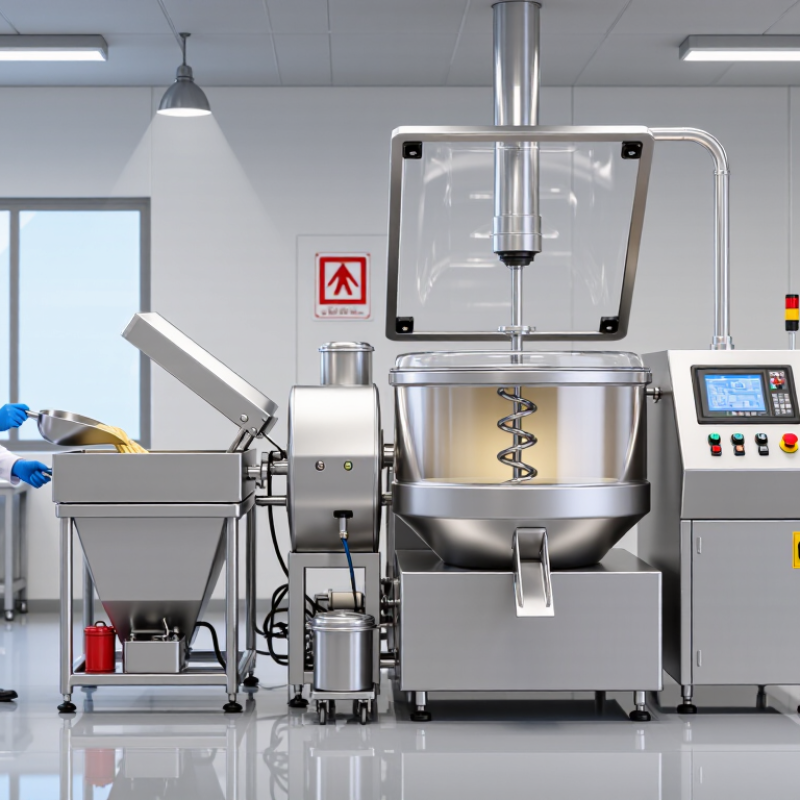
How to Choose the Best Cream Mixing Machine?
Choosing a cream mixing machine starts with the product, not the equipment brochure. A light facial lotion needs different movement from a dense body butter. The machine’s main functions include blending, dispersing, heating, cooling, and removing trapped air. An anchor agitator handles thick creams slowly, while a high-shear head breaks down powders and small oil droplets. Consistency matters. Ask how the formula behaves at 20°C, 40°C, and during cooling.
Applications also determine vessel design and control needs. Cosmetic creams often benefit from vacuum mixing, especially when a smooth surface and fewer bubbles matter. Food creams may require gentle scraping to prevent scorching near heated walls. A jacketed vessel supports controlled heating and cooling, while variable-speed drives protect sensitive emulsions from excessive shear. During production trials, compare batch time, texture, temperature uniformity, and cleanout effort. Watch the wall. Product left behind can affect yield and hygiene.
Choose a working volume that matches normal batches, not only the largest possible load. An oversized vessel can mix poorly when half empty. Check recipe records, alarms, torque displays, and inspection access. Product-contact materials should resist corrosion and meet applicable food or cosmetic requirements. Request test mixing with your actual formula. It may expose problems that a polished demonstration hides. No machine is perfect. Scrapers wear, seals age, and thick formulas can overload a motor. Plan maintenance access before installation, because difficult repairs create expensive downtime.
| Selection Dimension | What to Evaluate | Typical Options or Ranges | Best Application Fit | Practical Selection Guidance |
|---|---|---|---|---|
| Cream or Product Type | Viscosity, solids content, sensitivity to shear, and whether the product contains powders, oils, or air-sensitive ingredients. | Low-viscosity lotions; medium-viscosity creams; high-viscosity ointments, balms, and pastes. | Cosmetics, personal care products, pharmaceutical creams, food creams, and specialty formulations. | Choose the agitator and drive system according to the product's actual viscosity rather than relying only on the product name. |
| Mixing Function | Ability to combine liquid and solid ingredients uniformly and prevent separation during processing. | Anchor mixing, paddle mixing, propeller mixing, or combined agitation systems. | Emulsions, creams, lotions, sauces, gels, and semi-solid formulations. | An anchor agitator is generally suitable for viscous products, while high-speed agitation can help disperse powders and reduce particle size. |
| Homogenization | High-shear processing used to improve dispersion, emulsion uniformity, and texture. | Bottom homogenizer, in-line homogenizer, or high-shear rotor-stator system. | Skin creams, emulsions, pharmaceutical creams, and products requiring a smooth texture. | Use homogenization when fine droplet or particle dispersion is important. It may be unnecessary for simple low-viscosity blends. |
| Vacuum Capability | Ability to remove entrapped air and reduce oxidation or foaming during mixing. | Atmospheric operation or vacuum operation, commonly specified by the manufacturer's working vacuum range. | Air-sensitive creams, high-quality cosmetics, pharmaceutical preparations, and products with a smooth appearance requirement. | Vacuum processing is valuable when bubbles, oxidation, or difficult filling are concerns. The vessel and seals must be designed for vacuum service. |
| Working Capacity | Usable batch volume, including sufficient headspace for agitation, expansion, and vacuum processing. | Laboratory batches from approximately 1–20 L; pilot batches from approximately 20–200 L; production batches above 200 L. | Research and development, pilot production, contract manufacturing, and continuous commercial production. | Select based on working volume rather than total vessel volume. Many vessels require headspace and should not be filled to the maximum level. |
| Agitator Speed | Speed range and control accuracy required for gentle blending or high-shear dispersion. | Low-speed anchor mixing often operates in the tens of revolutions per minute; high-speed dispersers and homogenizers operate at substantially higher speeds. | Gentle creams, shear-sensitive formulations, powder dispersion, and emulsion formation. | A variable-frequency drive allows the operator to adjust speed during charging, emulsification, cooling, and final homogenization. |
| Heating and Cooling | Temperature control for melting waxes, dissolving solids, forming emulsions, and cooling the finished product. | Jacketed vessel using water, thermal fluid, or other approved heat-transfer media. | Wax-containing creams, ointments, emulsions, balms, and formulations with temperature-sensitive ingredients. | Confirm the required heating and cooling rate, temperature range, sensor location, and compatibility with the formulation. |
| Temperature Control | Accuracy, monitoring, and control of product temperature during each process stage. | Digital temperature display, programmable controller, and automatic heating or cooling control. | Products with narrow processing windows or ingredients that degrade under excessive heat. | Use independent product-temperature measurement when jacket temperature may differ significantly from the actual batch temperature. |
| Material of Construction | Corrosion resistance, cleanability, surface finish, and compatibility with the formulation. | Product-contact parts are commonly manufactured from stainless steel suitable for hygienic processing. | Cosmetics, food products, pharmaceuticals, and industrial creams. | Specify the required stainless-steel grade, internal surface finish, gasket material, and resistance to acids, alkalis, oils, and cleaning agents. |
| Hygienic Design | Drainability, accessibility, avoidance of dead zones, and ease of cleaning and inspection. | Sanitary fittings, smooth internal surfaces, hygienic seals, clean-in-place capability, or manual cleaning access. | Cosmetic, food, pharmaceutical, and other regulated production environments. | Prioritize a fully drainable vessel and an agitator design that minimizes product retention and cross-contamination risk. |
| Powder Incorporation | Ability to wet, disperse, and deagglomerate powders without excessive dust or lump formation. | Powder induction system, high-shear mixer, vacuum powder suction, or controlled manual charging. | Thickening agents, pigments, active ingredients, powdered emulsifiers, and dry additives. | For difficult powders, a dedicated powder-induction or high-shear system can reduce mixing time and improve batch consistency. |
| Control System | Control of mixing speed, temperature, vacuum level, process time, and recipe parameters. | Manual controls, touchscreen control, programmable recipes, and data recording. | Small-batch development, repeatable production, and regulated manufacturing. | Choose automation according to process complexity and documentation needs. Over-automation can increase cost without improving a simple process. |
| Discharge Method | How efficiently the finished cream can be transferred without excessive residue or air entrainment. | Bottom outlet, side outlet, sanitary valve, transfer pump, or vacuum-assisted discharge. | High-viscosity creams, products supplied directly to filling equipment, and closed-transfer processes. | Match the outlet size and pump type to product viscosity. A slow or undersized discharge path can extend batch-release time. |
| Batch Consistency | Repeatability of mixing time, temperature profile, shear exposure, and ingredient addition sequence. | Fixed operating procedures, automated recipes, calibrated sensors, and recorded process parameters. | Commercial products requiring consistent appearance, viscosity, and stability. | Define measurable acceptance criteria such as viscosity, pH, temperature, particle dispersion, and visual uniformity before final equipment selection. |
| Scale-Up Considerations | Whether laboratory or pilot results can be transferred to a larger vessel without changing product quality. | Comparable agitator geometry, power input, mixing pattern, heat-transfer area, and addition sequence. | Products moving from research and development to pilot or commercial production. | Scale-up should consider mixing time, power per unit volume, shear conditions, heat-transfer performance, and the position of ingredient additions. |
| Safety Features | Protection from moving parts, hot surfaces, vacuum conditions, and unexpected machine operation. | Interlocked covers, emergency stops, pressure or vacuum protection, overload protection, and guarded drives. | All professional processing environments. | Verify that safety features match the operating temperature, vacuum condition, cleaning method, and site safety requirements. |
| Maintenance Requirements | Ease of inspecting seals, bearings, valves, sensors, agitators, and electrical components. | Removable contact parts, accessible service points, standardized seals, and documented maintenance procedures. | Facilities seeking high uptime and predictable operating costs. | Consider spare-part availability, seal replacement intervals, lubrication requirements, and service access before purchase. |
| Recommended Machine Configuration | Combination of functions required by the formulation and production scale. | For many cosmetic or pharmaceutical creams: jacketed vessel + variable-speed anchor agitator + high-shear homogenizer + vacuum capability. | Medium- to high-viscosity creams and emulsions requiring smooth texture and low air content. | The final configuration should be confirmed through product trials using the actual formulation, batch size, and processing sequence. |
Match the machine to viscosity, batch size, and heat sensitivity. An anchor agitator suits thick creams and slow blending. High-shear mixing disperses powders quickly but may add air and heat. Test the formula cold before choosing.
Planetary mixers reach material near the vessel wall. This helps with dense emulsions and heavy creams. However, performance may change near full capacity. A half-load test is not enough.
Choose vacuum mixing when bubbles, oxidation, or unstable texture cause problems. It can improve appearance and consistency. Still, vacuum systems add cleaning and maintenance demands. The extra complexity may not always pay off.
Corrosion-resistant stainless steel suits acidic or salty formulas. Smooth, drainable surfaces reduce residue retention. Inspect welds, seals, and outlet valves carefully. A shiny tank is not automatically hygienic.
Working volume matters more than the tank’s advertised volume. A 500-liter vessel may mix only 350 liters effectively. Leave headspace for splashing and even dispersion. Test the smallest planned batch too.
Variable-speed control should support gentle blending and high-shear operation. Recordable speed, temperature, vacuum, and time settings improve repeatability. Alarms should be clear for tired operators. A touchscreen alone is not intelligent control.
Measure torque, speed, shear, batch time, temperature, and final texture. Use the actual cream viscosity during trials. Compare cleaning-water use as well. Attractive specifications can mislead.
Check polished welds, accessible seals, drainable outlets, and spray coverage. Cleaning-in-place can save labor. It does not guarantee a clean vessel. A failed rinse may leave cream behind.
Look for guards, emergency stops, lid sensors, and overload protection. Test every feature during commissioning. Some safety controls feel inconvenient. That is acceptable. A faster machine is not better if one adjustment creates danger.
Choosing the right Cream Mixing Machine begins with understanding how it will be used and what type of cream it must process. Consider the required mixing speed, consistency, viscosity, temperature sensitivity, and production volume. Different machine types and mixing mechanisms are designed for specific applications, so selecting suitable materials, especially corrosion-resistant and hygienic components, is essential for product quality and durability.
A practical evaluation should also include machine capacity, control systems, cleaning procedures, and safety features. Easy-to-use controls can improve production consistency, while simple disassembly and sanitation help reduce maintenance time and contamination risks. Finally, compare the purchase cost with energy efficiency, operating expenses, reliability, and expected service life. The best Cream Mixing Machine is not necessarily the least expensive option, but the one that provides stable performance, meets production requirements, supports safe and efficient operation, and delivers strong long-term value.
