
How to Choose the Best Filling Machinery for Your Business?

Time:2026-09-26 Author:Sienna
0%

Choosing the right Filling Machinery can shape product quality, labor needs, and daily production pace. A machine that works well for one product may struggle with another. Thick syrup moves differently from thin juice. Foamy liquids can overflow, while small bottles may need careful positioning. These details matter.

The best choice starts with a clear picture of your operation. Consider the product’s viscosity, container shape, target fill volume, and expected output per hour. Check how often staff will change products or package sizes. A line that handles today’s orders may not suit next year’s growth. That is easy to overlook. It happens.

Equipment specifications offer a useful starting point, but they are not the whole answer. Ask suppliers how accuracy is tested and which product conditions were used. Request a demonstration with your own containers and, where practical, a representative product. Observe setup time, spills, cleaning access, and how operators correct small errors. A polished showroom run can hide awkward changeovers.

Also examine installation, training, spare-part access, and routine maintenance. These affect usable production time long after delivery. Compare the full cost of ownership, not only the purchase price. Include utilities, labor, service, and expected downtime. No machine is perfect for every plant. The right decision balances performance with practical limits, then confirms the fit through evidence rather than assumptions. This guide explores key questions to ask before investing, so your selection reflects real production needs—not just a sales brochure.
How to Choose the Best Filling Machinery for Your Business?

What Is Filling Machinery and How Does It Work?

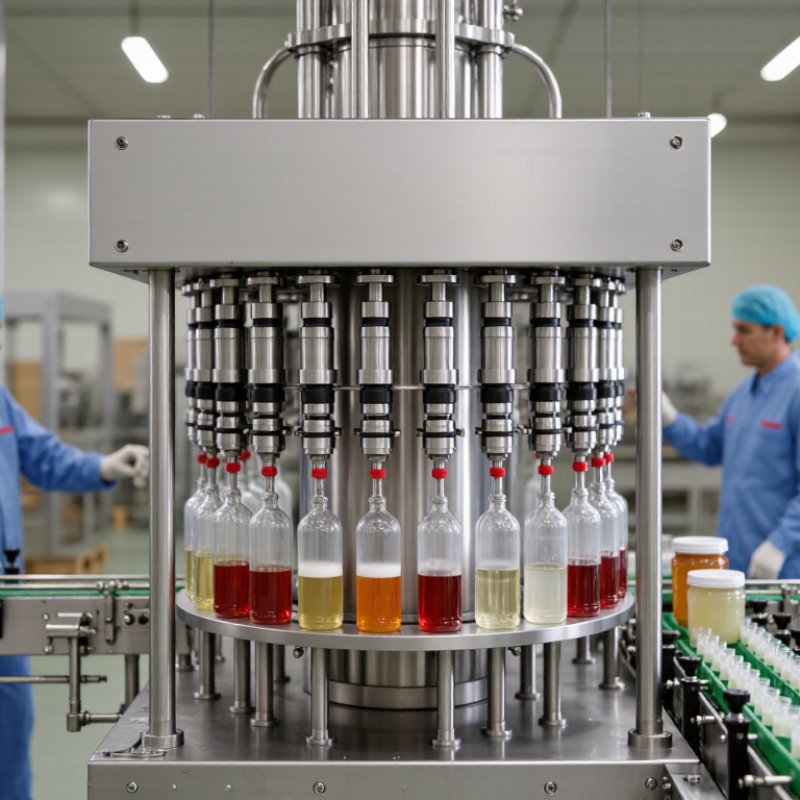
Filling machinery transfers a measured amount of liquid, paste, powder, or small particles into a container. A typical system includes a product hopper or tank, a dosing mechanism, nozzles, controls, and a conveyor or worktable. The right setup depends on the product’s flow behavior and the container, not just the advertised speed.

Here is how a cycle usually works: containers move into position, sensors confirm their presence, and nozzles dispense a preset dose. Gravity fillers suit freely flowing liquids, while piston systems can handle thicker products. Some machines use pumps for controlled transfer. The nozzles then stop or retract to reduce drips. Operators may adjust fill volume, speed, and nozzle height through a control panel. Small changes matter.

A fast demonstration can be misleading. Product temperature, foam, air bubbles, or uneven particles may change filling accuracy during a full shift. Test with the actual product and containers, then check several fills by weight or volume. Also consider cleaning access, changeover time, and the skill needed for routine adjustments. A machine that runs smoothly for one sample may need careful tuning in daily production.

Which Product and Container Factors Affect Machine Selection?

A filling machine should suit the product’s real behavior, not just its label. Check viscosity, temperature range, particle size, and whether the product foams or drips. Thin liquids may need different flow control from thick creams. Products with fruit pieces or powders can require wider passages to reduce clogging. Small details matter.

Container shape can change the filling process. Measure opening width, height, material, and stability on the conveyor. A narrow-neck bottle may need a precise nozzle, while a wide jar can be easier to fill but harder to position consistently. Glass, plastic, and flexible pouches also respond differently to pressure and handling. Do not assume one container setting will work for every size.

Estimate the required output, then test with actual product and containers. Observe fill accuracy, splashing, foam, and how quickly operators can clean or change parts. A short trial can reveal issues that a specification sheet misses. It is easy to overfocus on speed; that can be a costly blind spot. Consider future package changes too, but avoid paying for features your process may never use.

How Do Different Filling Technologies Compare?

When choosing filling machinery, compare how each technology handles your actual product. Gravity fillers suit thin liquids with stable flow and simple packaging. They are affordable, but accuracy can change when liquid temperature shifts. Pump fillers manage thicker products, including sauces, creams, and detergents. Their output remains more consistent across different viscosities. However, pump cleaning can take longer than expected.

Piston fillers deliver accurate volumes through measured strokes. They work well for dense products, but their moving seals need regular inspection. Peristaltic fillers keep the product inside the tubing, which supports cleaner changeovers. They also reduce contact with internal machine parts. The tubing, however, may wear quickly under continuous production. Overflow fillers create an even liquid level across containers. This improves shelf appearance, though it may waste some product during filling. Time-pressure systems can fill thin liquids rapidly, but foaming may require slower settings.

During a small production trial, I would test speed, accuracy, foam, dripping, and cleaning time. Laboratory results alone can mislead. A machine may perform perfectly for ten minutes, then struggle after two hours. Check the smallest and largest container sizes before ordering. Confirm whether operators can adjust recipes without complicated tools. Servo-driven systems often provide precise control, yet their higher cost may not suit every facility. I would also record product temperature and batch viscosity. These details reveal why filling results change. Some decisions still require compromise. The fastest option is not always the most reliable.

How to Choose the Best Filling Machinery for Your Business? — How Do Different Filling Technologies Compare?

Filling technology How it works Best suited to Key advantages Main considerations
Gravity filling Product flows from a raised tank into the container under gravity, often through timed or level-controlled valves. Thin, free-flowing liquids such as water and some non-carbonated beverages. Simple operating principle; can be economical for suitable low-viscosity products. Fill consistency can be affected by flow rate, product properties, and container conditions. Not ideal for thick products.
Overflow filling Product is pumped into each container until it reaches a set level; excess product returns to a tank or recirculation system. Thin liquids when a uniform visible fill line is important, including containers with slight internal-volume variation. Creates a consistent-looking fill level across containers. The fill level does not necessarily mean the same product volume in every container. Foaming, splashing, and product recovery need consideration.
Piston filling A piston draws a measured volume into a cylinder and dispenses it through a filling nozzle. A broad range of liquids, including viscous products such as sauces, creams, and gels; suitable for particulates only when the product path and valves are designed for them. Positive-displacement action handles thicker products better than many simple flow-based methods; dispensed volume is mechanically controlled. Product contact parts and valves may require more thorough cleaning. Abrasive or large particulates can require specialized equipment.
Peristaltic filling Rotating rollers compress flexible tubing to move a controlled amount of product through the tube. Small-volume batches, sensitive products, and applications where product contact with the pump is limited to the tubing. The product contacts the tubing rather than the pump mechanism; tubing can be replaced between products or batches. Tubing wears and must be inspected or replaced. Output depends on tubing condition, setup, and product characteristics.
Time-pressure filling Product is dispensed under controlled pressure for a set period; the delivered amount depends on flow during that interval. Free-flowing products and operations that need a relatively straightforward, adjustable filling system. Filling time and pressure can be adjusted without a measuring piston in the product path. Changes in viscosity, pressure, temperature, or supply conditions can change the amount dispensed; the process may need regular checks and adjustment.
Net-weight filling A weighing system measures the product mass delivered to each container and stops the fill at the target weight. Products sold by weight, higher-value fills, and applications where fill mass is the required control measure. Measures mass directly, so the target does not rely on converting a set volume using product density. Scale performance can be affected by vibration, drafts, and the filling setup. The equipment and controls may be more complex than basic flow-based systems.

Selection note: Actual filling speed and accuracy depend on the product, container, equipment design, operating conditions, and maintenance. Test the intended product and container on the proposed system before purchase.

What Capacity, Accuracy, and Automation Level Do You Need?

How to Choose the Best Filling Machinery for Your Business?

What Capacity, Accuracy, and Automation Level Do You Need?

Start with your real production pattern, not the machine’s advertised maximum. Count saleable containers per minute across normal shifts, planned breaks, and product changeovers. Then allow room for seasonal peaks without buying capacity that sits idle. A line filling 500 small bottles may behave very differently from one handling thick sauces in wide-mouth jars. Test your actual product and packaging. Small details matter.

Accuracy affects both giveaway and rejected containers. Define an acceptable fill range for each product, then run trials at the slowest and fastest planned speeds. Record the results across multiple containers, not just one clean sample. Viscosity, foam, temperature, and container shape can all shift performance. Ask how quickly operators can adjust settings after a changeover. That part is often underestimated.

Automation should solve a specific bottleneck, such as repetitive handling or inconsistent checks. Deloitte’s 2024 Smart Manufacturing Survey found that 92% of surveyed manufacturers viewed smart manufacturing as a driver of competitiveness over the next three years. That is a broad manufacturing finding, not a promise that every filler needs full automation. McKinsey Global Institute’s 2017 report, A Future That Works, estimated that about half of work activities could be automated with demonstrated technologies. Activities, not entire jobs. Compare labor savings with training, maintenance, and downtime risks; the numbers may not look tidy at first.

How Should You Evaluate Costs, Suppliers, and Future Scalability?

Compare filling machines by total cost of ownership, not purchase price alone. Include installation, compressed air, electricity, change parts, cleaning time, and scheduled maintenance. Ask for a written estimate based on your actual container size and target fill volume. A low-cost unit may need frequent manual adjustment. That adds labor. Record expected downtime during changeovers; estimates often miss it.

Evaluate suppliers through evidence, not presentation alone. Request references from facilities with similar products and shift patterns. Ask how quickly technicians respond, which spare parts are stocked nearby, and what operator training is included. Review acceptance-test criteria before signing. Sample containers, fill accuracy, reject rates, and cleaning steps should be documented. A polished demonstration may not reveal problems with foaming liquids or a tired operator on a late shift.

Plan capacity around realistic demand, including seasonal peaks and product changes. Check whether the machine can handle different bottle heights or closures without a full replacement. Confirm available floor space, utility connections, and room for additional equipment. Modular upgrades can help, but they may cost more upfront. There is no perfect forecast. Revisit your volume assumptions before choosing a line speed, and leave room for practical adjustments.

How to Choose the Best Filling Machinery for Your Business

Suggested evaluation weights for comparing filling machinery options

How to use this framework: Compare each machine’s purchase, installation, operating, and maintenance costs; assess supplier training, spare-parts availability, and service response; then consider whether capacity and format changes can be accommodated as your business grows. The percentages are an illustrative planning model, not an industry benchmark—adjust them to your priorities.

FAQS

What product properties should guide filling machine selection?

Check viscosity, temperature, particle size, foaming, and dripping behavior. Thin liquids and thick creams need different flow control. Small details matter.

How can particles affect filling performance?

Fruit pieces, powders, or other particles may clog narrow passages. Wider product paths can reduce blockages. Test the real mixture.

Which container measurements are important?

Measure the opening, height, material, and conveyor stability. Narrow openings need precise nozzles. Wide jars may fill easily but position inconsistently.

Should one machine setting fit every container size?

Usually not. Glass, plastic, and flexible pouches react differently to pressure. Changing container size may require new settings or parts.

How should required production capacity be calculated?

Count saleable containers per minute during normal shifts. Include breaks, changeovers, and seasonal demand. Do not rely on the advertised maximum.

How can fill accuracy be tested properly?

Define an acceptable fill range for each product. Test multiple containers at slow and fast speeds. One perfect sample proves very little.

What problems should operators watch for during machine trials?

Observe splashing, foam, dripping, uneven fills, cleaning time, and changeover effort. A short trial can reveal hidden problems. Test it twice.

When is automation worth considering?

Automation should address a clear bottleneck, such as repetitive handling or inconsistent checks. Compare labor savings with training, maintenance, and downtime costs. The numbers may stay untidy.

Should future packaging changes influence the purchase?

Allow some flexibility for likely package changes. Avoid paying for unused features or excessive capacity. That assumption can age badly.

Conclusion

Choosing the right Filling Machinery is essential for improving production efficiency, product consistency, and long-term business growth. Filling machines work by measuring and transferring liquids, pastes, powders, or other products into containers, with the filling method selected according to the product’s viscosity, texture, temperature, foaming behavior, and sensitivity. Container shape, size, material, and opening design also influence machine compatibility. Comparing technologies such as volumetric, gravimetric, piston, pump, and level-based filling can help businesses balance precision, speed, flexibility, and maintenance requirements.

Before making a decision, define your required output, acceptable filling tolerance, and desired level of automation. Consider whether the equipment can handle current container formats and future product expansion. A complete evaluation should include purchase price, operating costs, cleaning time, spare parts, training, safety features, and technical support. Selecting a reliable supplier with customization capabilities and scalable equipment can reduce downtime and provide a stronger return on investment as production demands increase.

Sienna

Sienna

Sienna is a skilled marketing professional with a deep expertise in our company’s core products and services. With a passion for innovation and detail, she plays a pivotal role in crafting insightful blog posts that not only highlight the unique features of our offerings but also provide valuable......