
China’s cosmetics industry has become a major source of practical filling equipment for growing brands. This guide introduces China Top 10 Semi Automatic Mascara Filling Machines and compares their useful production features.
The focus is the Semi-Automatic Mascara Nail Polish Lipgloss Filling Machine. This equipment serves several viscous cosmetic products with adjustable filling volumes. A heated hopper can keep lip gloss smooth during filling. A piston pump can help control mascara dosage. A foot pedal may support faster, cleaner operation.
Details matter.
A stable nozzle reduces dripping around small bottles. Servo controls can improve repeatability between batches. Stainless steel contact parts simplify cleaning and support cosmetic hygiene requirements. Quick-change components also reduce downtime when switching from mascara to nail polish.
Zhang Rui, an independent cosmetic-process engineer, says, “Accurate filling begins with product behavior, not machine speed.” This advice deserves attention. Different formulas can react differently to temperature, pressure, and nozzle design.
The selected machines should therefore be reviewed through real testing. Buyers should request sample filling videos, accuracy records, sealing details, and cleaning procedures. They should also check whether operators can adjust volume without complicated tools.
A ranking is never perfect.
Some machines may offer impressive output but require more manual handling. Others may provide simpler maintenance but lack advanced automation. Production scale, formula viscosity, container shape, and available floor space must guide the final decision.
This introduction prepares readers to examine ten Chinese models with a practical lens. It values measurable performance over attractive specifications. Trial results remain essential before purchase.
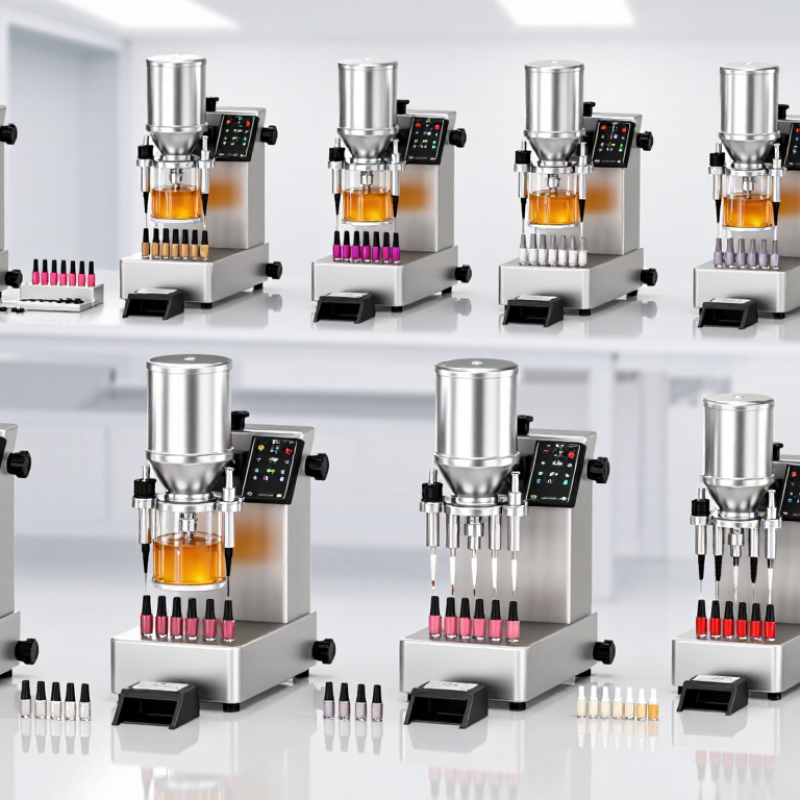
Semi automatic mascara filling machines are compact production systems that fill mascara into bottles with controlled accuracy. They usually combine a product hopper, piston pump, filling nozzle, and foot pedal or button control. An operator places each empty bottle beneath the nozzle and activates the filling cycle. The machine then dispenses a measured amount of mascara.
These machines suit small and medium cosmetic production lines. They handle thick formulas better than many general liquid fillers, but viscosity still affects performance. A warm room may improve flow, while a cooler room can slow the filling process. Operators often adjust the piston stroke, filling speed, and nozzle height for different bottle sizes. Small changes matter.
The operator remains important. Not automatic magic. They must check bottle alignment, product temperature, and fill weight during production. A poorly cleaned hopper may create clumps or inconsistent output. Manufacturers should also verify contact materials, sealing quality, and cleaning access before purchase. Stainless steel components are common because they support routine sanitation and durability. However, stainless steel alone does not guarantee reliable filling. Regular calibration is still necessary.
From practical experience, semi automatic equipment offers a useful balance between control and investment. It can reduce repetitive pouring and improve consistency, yet it does not remove human error completely. Some machines appear efficient during testing but perform differently with heavily pigmented formulas. Trial runs with the actual mascara are therefore essential before final selection.
The operator places empty tubes under the filling nozzles. A foot pedal or hand switch starts the cycle. A piston or servo pump pushes a measured mascara volume through each nozzle. The process still depends on operator control.
A steady nozzle movement reduces air pockets and splashing. It also keeps mascara away from the tube rim. Thick formulas can behave unpredictably. Small temperature changes may affect filling accuracy.
Heating depends on the formula and its flow behavior. Some thick mascaras may need a heated hopper. Others can fill without heating. Test the actual formula, not only a laboratory sample.
Measure several tubes from the beginning, middle, and end of production.
Check the filling range, nozzle design, and adjustment method. Stainless steel contact parts support easier cleaning. Tool-free nozzle removal saves time between batches. Also inspect the sealing system, pedal response, and emergency stop location.
Request a live test with the actual mascara formula and tubes. Measure ten filled units during the test. Repeat the measurements after cleaning the nozzle. Advertised speed can mislead.
Clean the nozzle, piston, hopper, hoses, and product path after each shift. Inspect seals daily for swelling or cuts. Use only approved lubricants for cosmetic equipment. Dried formula can change the next batch.
Record temperature, fill weights, pressure, piston speed, and nozzle height. Note every adjustment and recalibration. Verify fill weights hourly. These records can reveal recurring problems, although they may never explain everything.
Confirm the required air supply, often around 0.4–0.6 MPa. Check electrical compatibility with the facility. Request calibration records, instructions, spare parts, and technician training. A written acceptance checklist is wise.
This article presents China’s top 10 Semi-Automatic Mascara Filling Machines, offering a practical overview for cosmetic manufacturers seeking efficient and flexible filling solutions. It explains what semi-automatic equipment is, how operators load containers and control filling cycles, and how these machines support accurate dosing for mascara, lip gloss, nail polish, and similar liquid products. The featured equipment is compared by filling precision, production capacity, container compatibility, ease of operation, cleaning requirements, and overall durability.
The article also introduces the key features buyers should evaluate before making a decision, including material quality, adjustable filling volume, control systems, sealing performance, and after-sales support. In addition, it provides guidance on selecting a machine according to product viscosity, packaging design, output needs, and available workspace. Proper cleaning, calibration, lubrication, and routine inspection are emphasized to help maintain stable performance, reduce material waste, and extend equipment service life.
