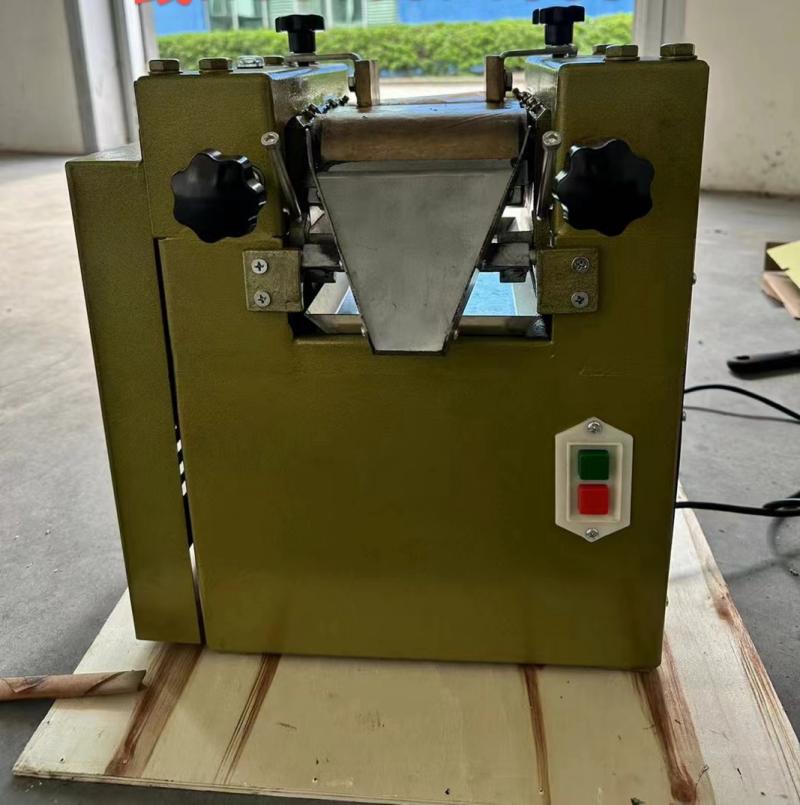
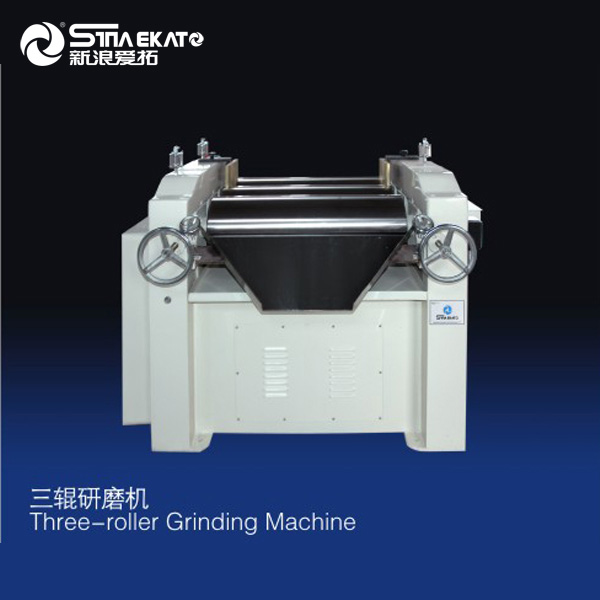
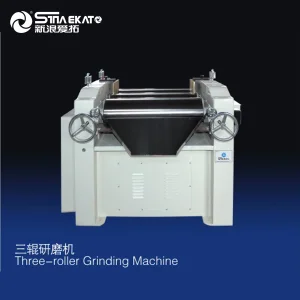
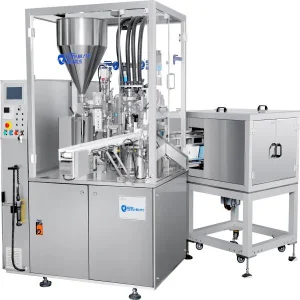
The machine consists of three horizontally positioned rollers that rotate in opposite directions, with each roller having a different speed and direction. The material to be ground is fed between the rollers, and the pressure between them causes the particles to be compressed and sheared, resulting in a fine, homogeneous mixture.
The rollers can be made of various materials, typically high-quality stainless steel or ceramics for durability and corrosion resistance. The machine is designed to be easily adjustable, allowing operators to fine-tune the pressure and speed of the rollers to achieve the desired particle size and consistency.
Product Inlet
Located between the fast and middle roller; designed to grind products to specific fineness.
Middle and Slow Rollers
Handles the second stage of grinding to significantly increase the overall grinding effect.
Product Outlet
Finished products are discharged from this plate once the process is complete.
Power Control
Equipped with a simple interface: Green button for power on and Red button for power off.
Distance Adjustment Wheel
Black wheel adjusts the distance between rollers; small roll adjusts the gradient of the product outlet.
Three-roller grinding machines are essential for industries requiring precise control over particle size, including cosmetics, pharmaceuticals, food, chemical industry, and electronics.
Frequently Asked Questions
1. How does a three-roller grinding machine work?
The machine uses three horizontal rollers rotating in opposite directions at different speeds. Material is fed between them, where pressure causes particles to be compressed and sheared, resulting in a fine, homogeneous mixture.
2. What materials are the rollers made of?
Rollers are typically constructed from high-quality stainless steel or ceramics to ensure long-term durability and high resistance to corrosion.
3. Can the grinding precision be adjusted?
Yes, the machine is designed for easy adjustment. Operators can fine-tune the pressure and roller speed to achieve the exact particle size and consistency required for their specific product.
4. Which industries commonly use this equipment?
This equipment is widely used in industries requiring precise particle distribution, such as cosmetics, pharmaceuticals, food, electronics, and general chemical industries.
5. What is the typical delivery and warranty period?
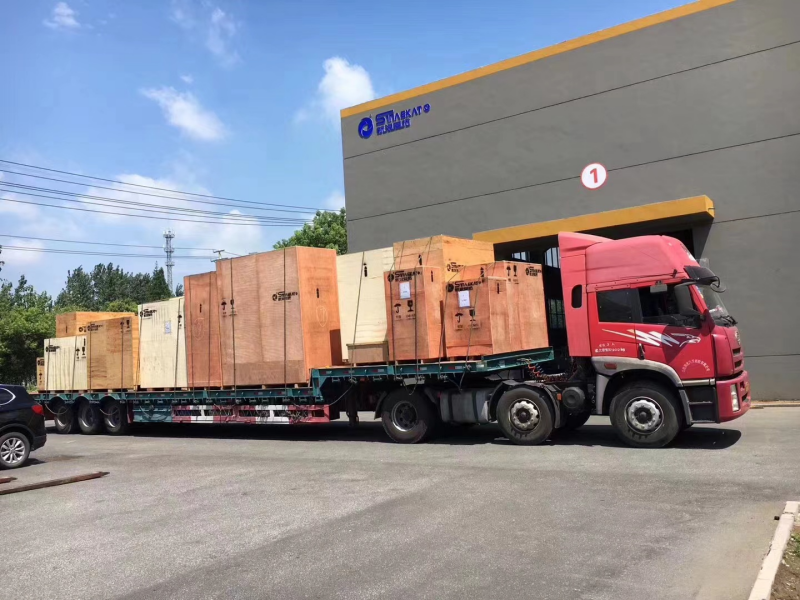
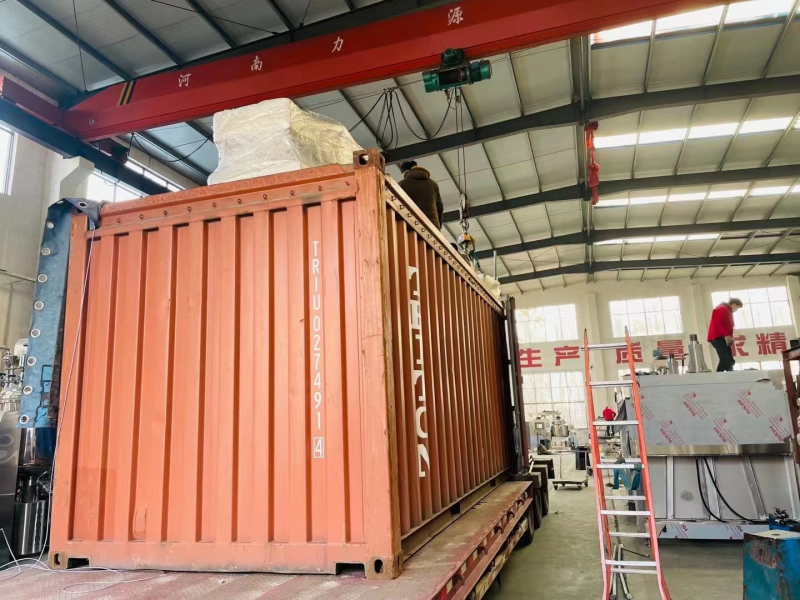
Standard delivery is within 30 days. All equipment comes with a two-year warranty and includes operation videos to assist with maintenance and usage.
6. What controls are available for adjusting the output?
The machine features a black wheel to adjust the distance between rollers and a smaller roll to adjust the gradient of the product outlet for controlled discharge.